By Shriprakash R. Pandey, Chairman & Managing Director, Commtel Networks
If you sit on a board, a project steering committee, or lead engineering for a critical infrastructure programme, you’ve probably had some version of this conversation:
- “We’ve locked the design; now execution risk is all about the site.”
- “Let’s add more people to commissioning; that’s where things slip.”
- “We’ll sort out integration when the systems are on the ground.”
But pause and ask yourself:
- Where is most of your risk actually created – in the field, or long before mobilisation?
- Are your teams “installing tested systems” on site, or “testing installed components” under pressure?
- Do you treat integration and delivery as a strategic lever, or as just another back-end technical requirement?
My view is straightforward: In complex, multi-location integrated telecom, security and safety (ITSS) system rollouts, most of the risk is already locked in before the first site team arrives.
If integration doesn’t happen in the controlled environment of a systems integration centre, it will happen on your sites – at higher cost, higher stress and higher exposure.
Why are multi-system, multi-site rollouts are so unforgiving?
Modern critical infrastructure projects rarely deploy a single system. They deploy full ITSS stacks – digital communications, security, surveillance and safety layers working together as one fabric. Think of what that bundle now includes:
- Telecom backbones, IP networks, voice and radio systems
- CCTV and video analytics
- Access control and perimeter or pipeline intrusion detection systems (PIDS)
- Public address, alarms and other safety systems
These systems are deployed across dozens or hundreds of locations, under tight implementation schedules in greenfield and brownfield environments. A recent Industry Report by Frost & Sullivan is explicit: ITSS projects exist to integrate these layers, so they function as a single, interoperable solution, not a pile of point systems. Integration and lifecycle support are central parts of the value chain, not optional extras. When both the physical footprint of (pipelines, power grids, road or rail tunnels, refinery and petrochemical complexes and their digital footprint (ITSS) scale together, site-first integration quickly becomes a liability. The field becomes a debugging environment and that is the most expensive place to discover design assumptions.

The hidden cost of “we’ll tune it on site”
- The default pattern for large-scale critical infrastructure projects still looks like this: Design each subsystem (CCTV, ACS, PIDS, telecom, PA, etc.).
- Procure and ship to site.
- Integrate “just enough” during installation and commissioning.
This creates predictable value leakage:
Integration under worst conditions
Interfaces are being exercised in real tunnels, substations, offshore platforms, dusty site locations instead of a controlled environment in a systems integration centre. Access is limited, safety constraints are high, and every change is slow.
Multiplication of rework
A design or configuration issue discovered late has to be fixed across many locations instead of once at the integration centre.
Version drift
Each site becomes its own “flavour” of the system, making future operations, upgrades and security hard to standardise.
Commissioning that does design work
Instead of confirming readiness (power-up, health checks, safety verification), commissioning teams are forced to solve architectural and integration gaps.
In short: site is being used to finish work that should have been completed in the systems integration centre. That’s where schedule, safety and commercial outcomes all start to fray.
What ITSS projects have already taught us?
Frost & Sullivan, in their report on ITSS, makes a few points that should make any board or CXO sit up:
- ITSS projects are explicitly structured around design engineering → system integration → installation & commissioning → service & maintenance. Systems integration is a dedicated phase.
- The ITSS partner’s central job is to make equipment from multiple vendors and technologies work together reliably – through rigorous interoperability testing, security validation and performance checks – while acting as a single point of accountability for timelines and coordination.
- For critical national infrastructure (CNI) sectors like oil & gas, power, transportation, defence and public safety, downtime, safety incidents or delayed commissioning have massive economic and societal consequences.
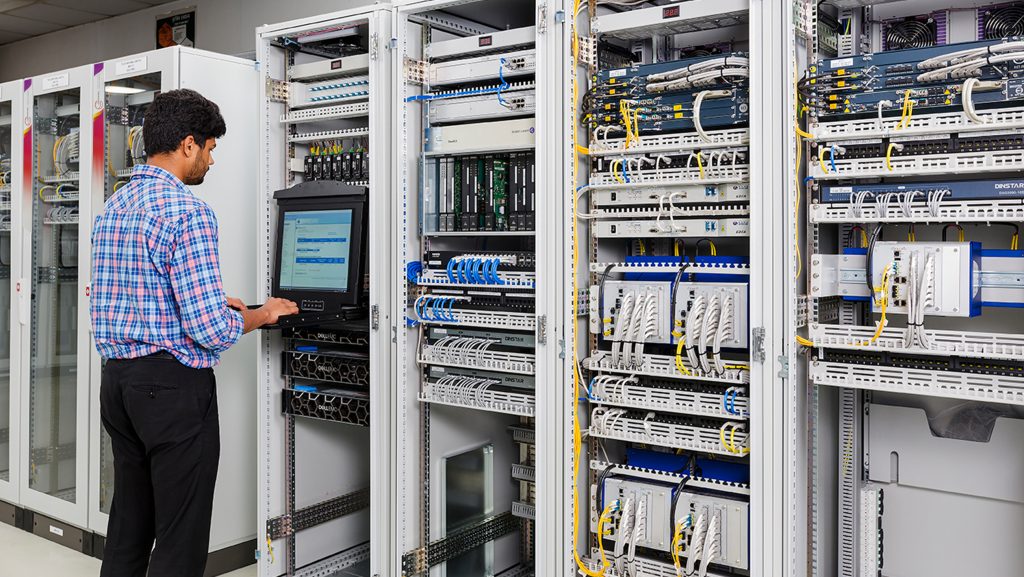
Our own delivery model is built on the same principle: complete systems are engineered, assembled, integrated and rigorously tested in controlled environments before deployment, so most of the uncertainty is removed before anyone reaches the site.
The message is consistent: If you don’t create a strong, centre-led integration phase, you’re making the site carry a load it was never designed for.
What an integration & delivery centre actually changes?
Majority of large critical infrastructure projects still think of “systems integration centre” as a room with a few racks, not as the strategic place where project risk is actively removed and costs optimised.
A modern integration & delivery centre for ITSS systems does much more:
1. Replicates the real stack
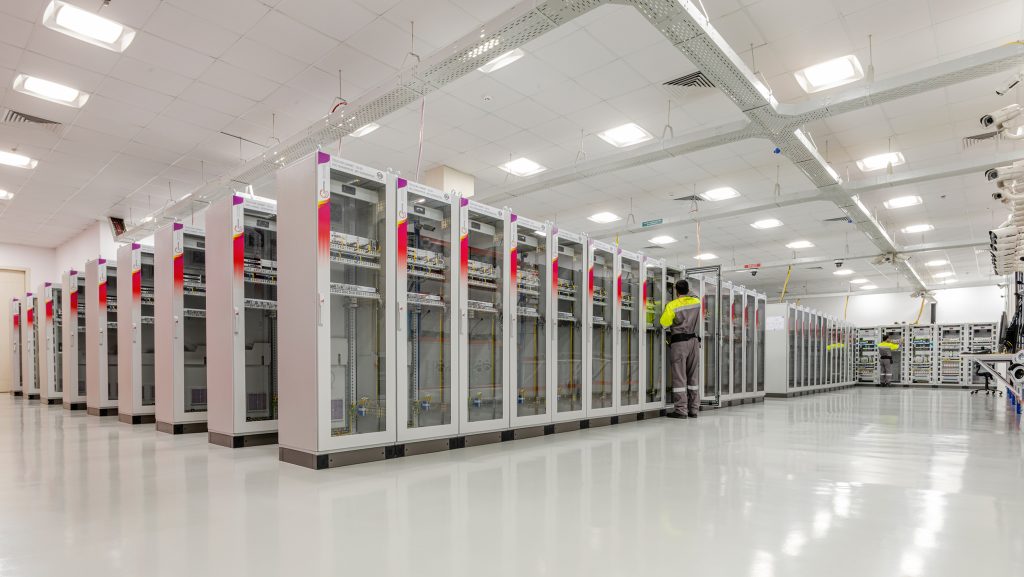
- The full architecture – telecom backbone, IP network, CCTV, ACS, PIDS, PA, safety systems – is built out in a controlled environment.
- Interfaces, data flows and control logic are exercised as they will work in the field.
2. Pre-assembles and functionally tests
- Systems are wired, configured and function-tested end-to-end (including edge devices and control centres) before they are ever packed for shipment.
- A deliberate burn‑in phase runs the integrated stack for an extended period, flushing out early or “infant‑mortality” failures so that only stable, proven components and configurations are dispatched to site – avoiding early‑stage failures during commissioning.
- Factory Acceptance Testing (FAT) becomes a genuine system test, not a checkbox.
3. Centralises logistics and configuration
- Pre-built, pre-configured panels and subsystems are shipped as kits, reducing on-site wiring, configuration time and variability between locations.
4. Builds in “born observable” operations
- Monitoring, diagnostics and lifecycle tools are integrated during the build, so the network and systems are deployed with observability in place from day one.
5. Repositions commissioning
- On site, the focus shifts to safe installation, basic configuration validation, power-up and health checks.
- Commissioning becomes a confirmation step, not the place where you discover whether systems talk to each other or not.
When you architect your project this way, you are not just changing where work happens. You are changing how much uncertainty reaches your sites.
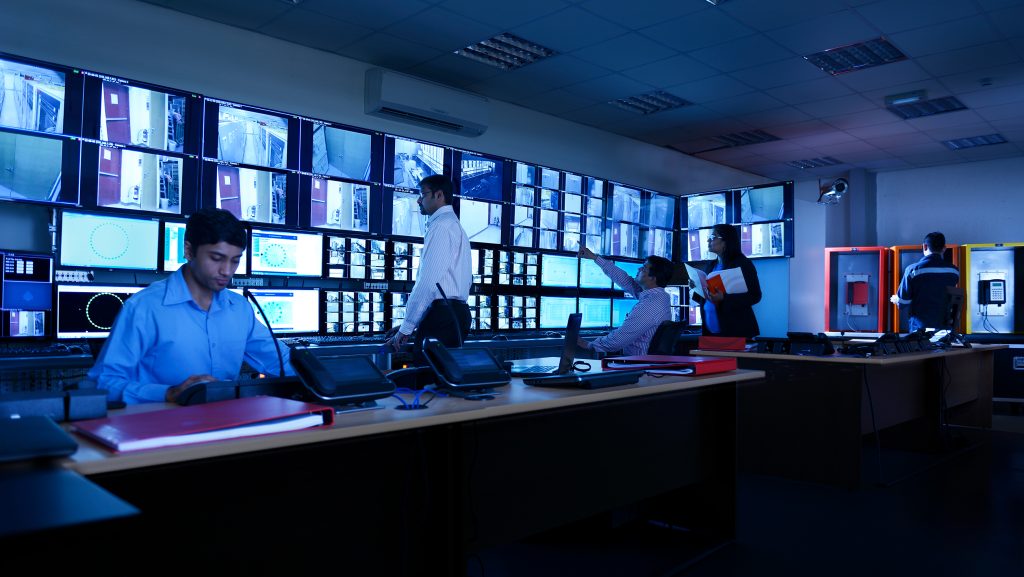
Neutral patterns across complex environments
Across large, complex programmes, the pattern is remarkably consistent:
- Long linear assets (pipelines, rail corridors, transmission lines) ITSS systems deployments span hundreds of kilometres and many remote sites. When the ITSS stack is integrated and tested centrally, sites become repeatable “drop-in” units rather than bespoke engineering exercises every time.
- Hazardous and high-risk environments For environments such as offshore facilities, refineries and high-voltage yards, physical access is limited and every extra hour increases risk and cost. Integrated systems mean your teams are not trying to solve integration problems while wearing PPE next to live assets.
- Tunnels, metros and high-density transport hubs Transport ITSS demands tight coupling of communications, surveillance, PAGA and control systems. When these interfaces are tuned and tested in the systems integration centre, tunnel and station works focus on installation and safety – not last-minute protocol and performance issues.
In each case, the early, centre-led work quietly decides whether the site phase feels like execution… or firefighting.
The Real Payoff of Pre-Deployment Systems Integration
In the end, no one champions pre-deployment integration centres for their own sake. They matter because they change the outcomes of a mega project.
When most of the real integration work happens in a controlled facility, four things improve at once:
- Timely, predictable delivery Unknowns are burned down before mobilisation. On site, teams follow a proven build rather than debugging under pressure, which shortens commissioning windows and makes dates more reliable.
- Projects that hold their budgets Interface issues and design gaps are found where fixes are cheap – not as late change orders, overtime and emergency works at site. Fewer surprises mean fewer reasons to redraw the cost baseline.
- Faster, smoother start-up Because the full ITSS stack has already run as an integrated system, the “teething troubles” phase is shorter. Operations inherit a stable platform, not a live experiment.
- Lower exposure in hazardous environments Less rework at site means fewer people solving problems around live assets, in PPE, under time pressure. That reduces safety risk as well as operational disruption.
A strong pre-deployment systems integration, viewed this way, isn’t just an engineering choice. It’s one of the few levers that can simultaneously protect schedule, budget, safety and stakeholder confidence.
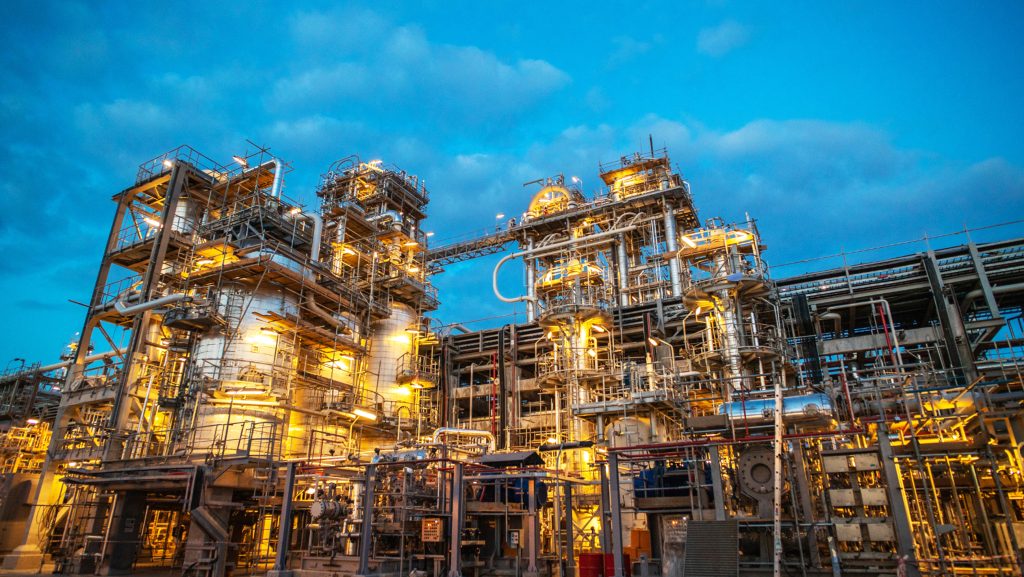
Systems Integration Centres: Where Risk, Technology and Value Align
Boards and engineering leaders already say the right things:
- “Safety first.”
- “No surprises at site.”
- “Right first time.”
Those intentions don’t fail for lack of sincerity. They fail because the architecture and delivery model don’t enforce them.
If you remember one line from this article, let it be this:
Decisions about risk, quality and schedule only stick when your architecture forces most of the smart, difficult work to be done before anyone reaches site.
Integration and delivery centres are where that work happens.
My belief is simple: the more intelligence, sensors, and controlled cabinet build we push upstream into the integrated systems before deployment begins, the more safety, predictability and value we unlock downstream at the site. Treating systems integration as core project requirement – not overhead – is one of the few moves that improves technical performance and commercial outcomes at the same time.
The leaders who act on that now won’t just deliver projects better – they’ll quietly change the risk culture of their entire organisation.