By Kedar Warang, Vice President – Solutions R&D, Commtel Networks
Safety Used to Be Mechanical. Today, It Is Computational.
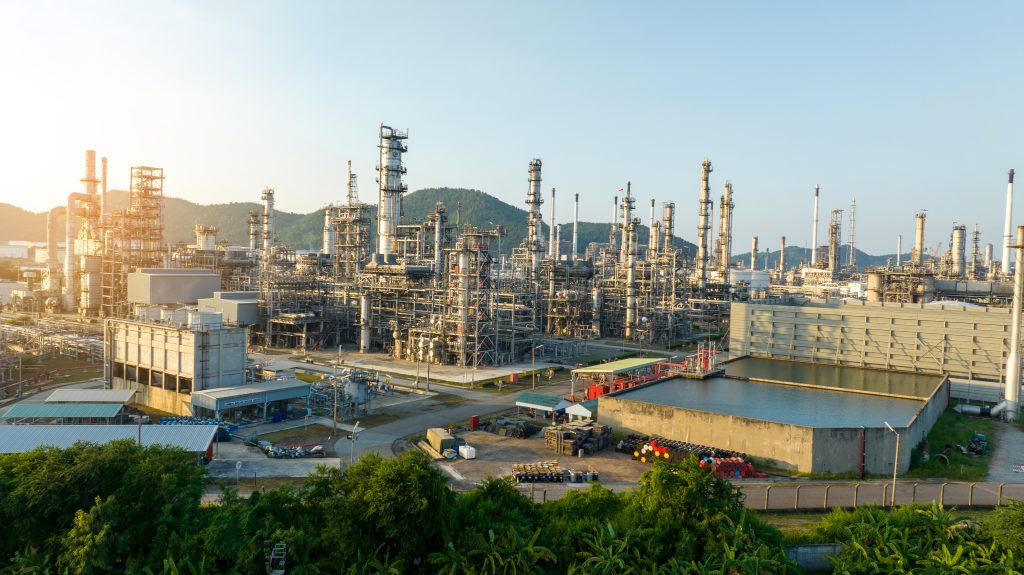
For decades, the safety of oil, gas, and power systems relied on physical barriers, alarms, and operator skill. But the world has changed. Critical infrastructure now generates millions of data points every hour: from sensors, logs, cameras, control systems and networks. By 2030, global infrastructure will produce more operational data in a single day than the entire decade before 2020 combined. As the energy landscape rapidly expands, with electricity generation rising from 15,400 TWh in 2000 to over 34,000 TWh by 2030, systems are becoming more complex, interconnected, and exposed to risk. In this new world, safety is no longer defined by how fast operators react. It is defined by how early the system can see weak signals of risk in the data, long before alarms trigger or equipment fails. This is the heart of predictive safety.
1. The Shift from Reactive to Predictive Safety
For decades, safety followed a reactive model: wait for an alarm, then respond. In oil, gas, and power CNIs operating across corrosive offshore sites, explosive hydrocarbon zones, and thermally stressed substations, risk rarely appears as a single, visible failure. Instead, it accumulates quietly through small data deviations, temperature drift, repeated log retries, vibration changes, network delays, or unusual access patterns, often becoming dangerous before any alarm is raised. Predictive safety reverses this model. It identifies deviations and patterns before they cross critical thresholds, allowing operators to intervene while failures are still preventable. This shift is only possible because ITSS integrates telecom, security, safety, and monitoring into a unified operational layer for continuous awareness.

Predictive safety reverses this model.
It identifies deviations and patterns before they cross critical thresholds, allowing operators to intervene while failures are still preventable. This shift is only possible because ITSS integrates telecom, security, safety, and monitoring into a unified operational layer for continuous awareness.
2. What Predictive Safety Really Means in ITSS
Predictive safety is not a tool or feature; it is a systemic way of operating critical infrastructure. By unifying digital communications, surveillance, and safety systems, ITSS creates a continuous flow of data from diverse devices and sensors that AI can analyse in real time. AI models learn normal operating behaviour, detect anomalies, and correlate subtle deviations across systems to reveal early signs of equipment degradation, cyber intrusion, or environmental stress, allowing risk to be recognised as a pattern rather than a single datapoint.
3. The Data That Makes Early Detection Possible
Every second, CNIs generate data from:
- Telecom and backbone networks connecting refineries, substations, and pipelines
- OT and process monitoring systems handling flow, pressure, switching, relay states
- Security and surveillance systems such as CCTV, access control, PIDS, fire & gas, PAGA, and emergency systems
- Condition and environmental sensors tracking UPS health, temperature, vibration
CNIs also generate logs and video streams, which are essential for anomaly detection. Smart inter-system interfaces in ITSS structure this data into meaningful situational insight. The more complete the data, the earlier systems can detect weak signals.
4. How AI and Analytics Turn Noise into Early Warning
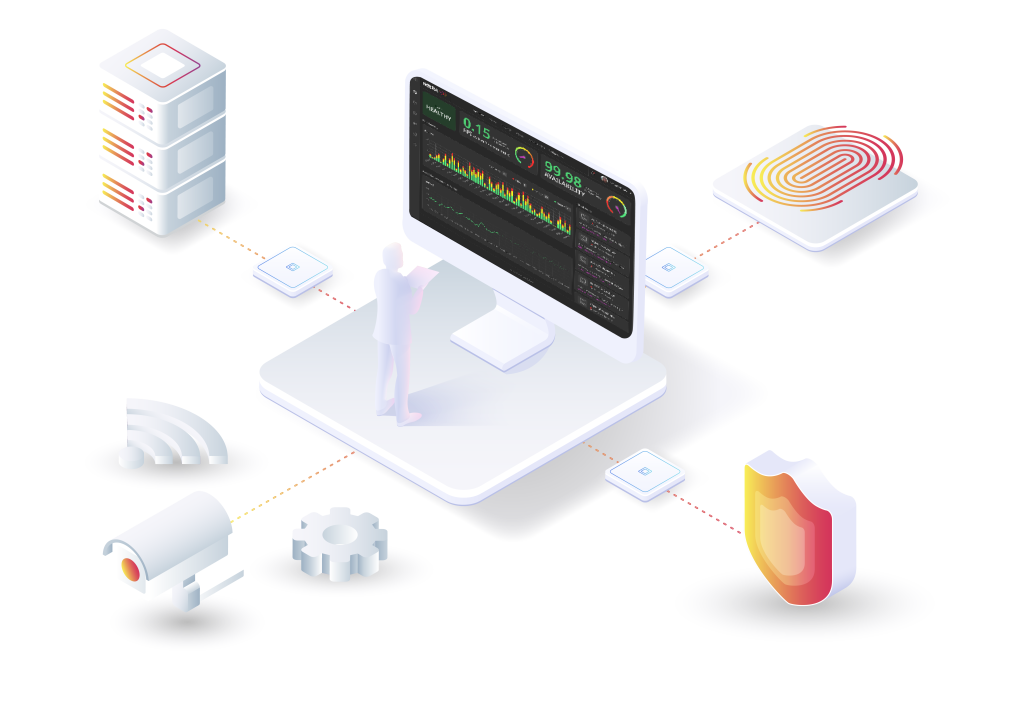
AI is what transforms data into safety:
- AI unifies intelligence across systems: It integrates digital communications, surveillance, and safety data to produce actionable insights.
- AI enables predictive capabilities: Analytics foresee equipment failures and operational stress hours or days before they happen.
- AI provides cyber-physical insight: It detects both cyber anomalies and physical abnormalities, critical in CNIs.
- AI automates rapid response: It isolates compromised systems, blocks malicious traffic, and applies patches nearly in real time.
- Baseline modelling: AI learns “normal behaviour” for equipment and flags subtle deviations before thresholds are breached.
- Multimodal analytics: By fusing data from sensors, logs, CCTV/PIDS, and network telemetry, multimodal analytics reveals risks that no single data stream could detect on its own.
5. How Integrated ITSS “Sees” Risk Before It Happens
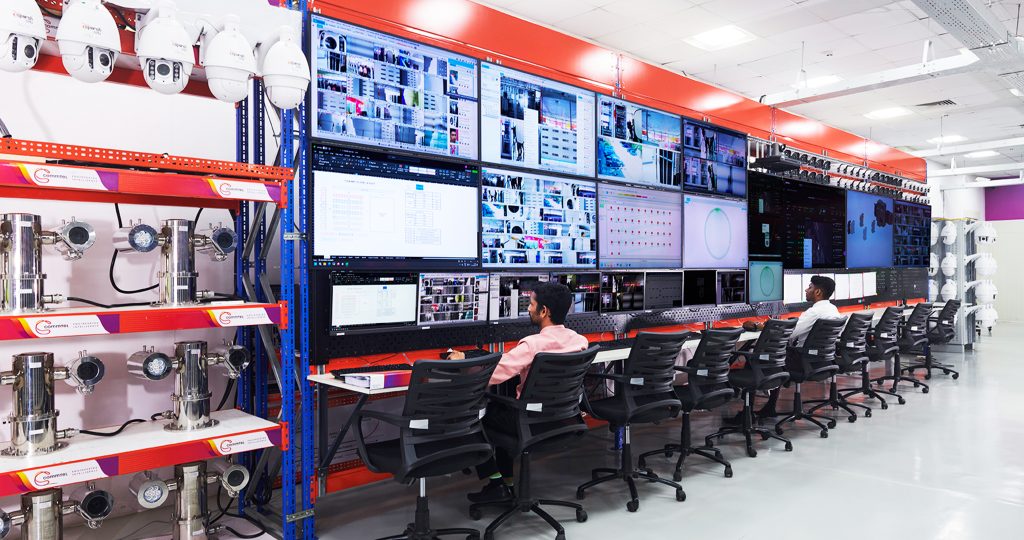
Predictive safety depends on the system architecture beneath the analytics. Integrated ITSS unifies telecom, security, and safety systems over resilient backbone networks such as DWDM and MPLS-TP, enabling continuous monitoring across offshore, hazardous, thermally stressed, and remote environments. By moving data from edge devices and sensors through high-availability transport into AI-driven analytics and SOP-based automation, this layered architecture reduces delay and uncertainty in risk response. This end-to-end flow is what allows ITSS to see risk forming long before human operators can.
6. Data as a Safety-Critical Asset
Data is no longer an operational by-product. In predictive safety, data becomes a safety barrier. Safety depends on data that is: Accurate, timely, and continuously available. It must also remain secure and traceable so operators can trust every signal in high-risk environments. When this data flows reliably across communication, monitoring, and safety systems, it becomes an active layer of protection rather than a passive operational by-product. Analytics then turn this data into early-warning signals. Modern Infrastructure needs: Automated, cleaned, structured, and interpreted data to enable safety and operational decision-making.
7. The Future of Predictive Safety by 2030
By 2030, the scale and complexity of critical infrastructure will be operating on a different order of magnitude, global electricity generation alone is projected to rise from 15,436 TWh (2000) to 34,140 TWh (2030). As operations become more distributed, connected, and data-rich, safety will shift from “responding to alarms” to continuous anticipation, where AI detects cyber-physical anomalies early, predicts failures, and enables faster, more adaptive protection. The next decade won’t reward the fastest reaction whereas it will reward the systems that see weak signals early and act before escalation becomes inevitable. When risk forms quietly in the data, the safest operators won’t be the ones who react fastest, they’ll be the ones who see it first.