By Dhrubajyoti Doley, Lead Software Architect – Solutions R&D, Commtel Networks
Where Integration Becomes Architecture
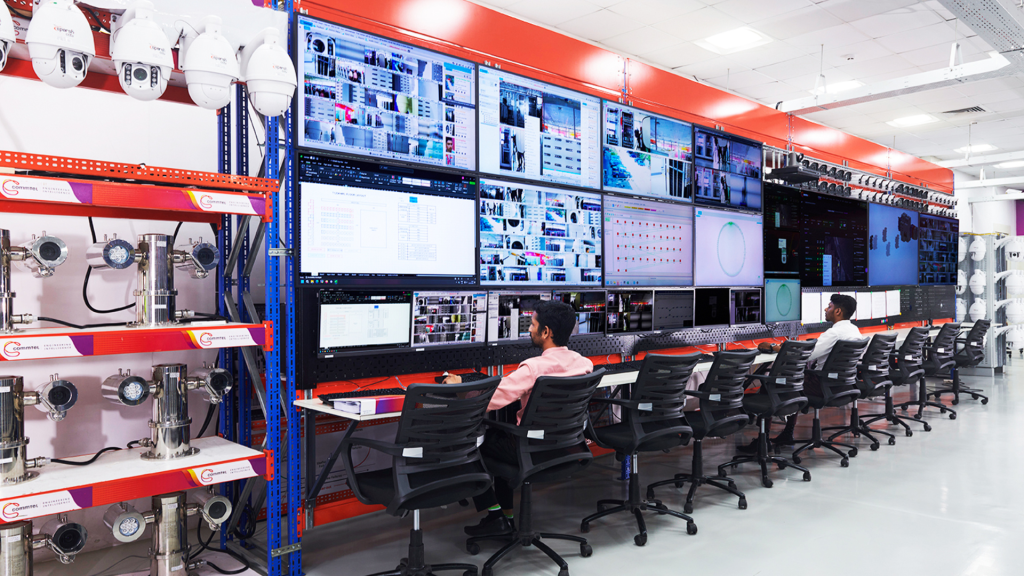
Over the years, we have learned that in oil, power, and gas networks, telecom is rarely just telecom.
What looks like connectivity on paper quickly becomes something far more critical in the field. A pipeline intrusion system must speak to video surveillance. A substation monitoring platform must exchange data with network management tools. Edge devices generate alerts that need to move instantly across layers of infrastructure.
None of these systems were designed together. Yet we expect them to function as one. That expectation is where integration stops being an engineering task and starts becoming architecture. When we build the software layer that connects SNMP devices, MQTT sensors, and telemetry systems, we are not simply writing code. We are defining how reliable that entire ecosystem will be.
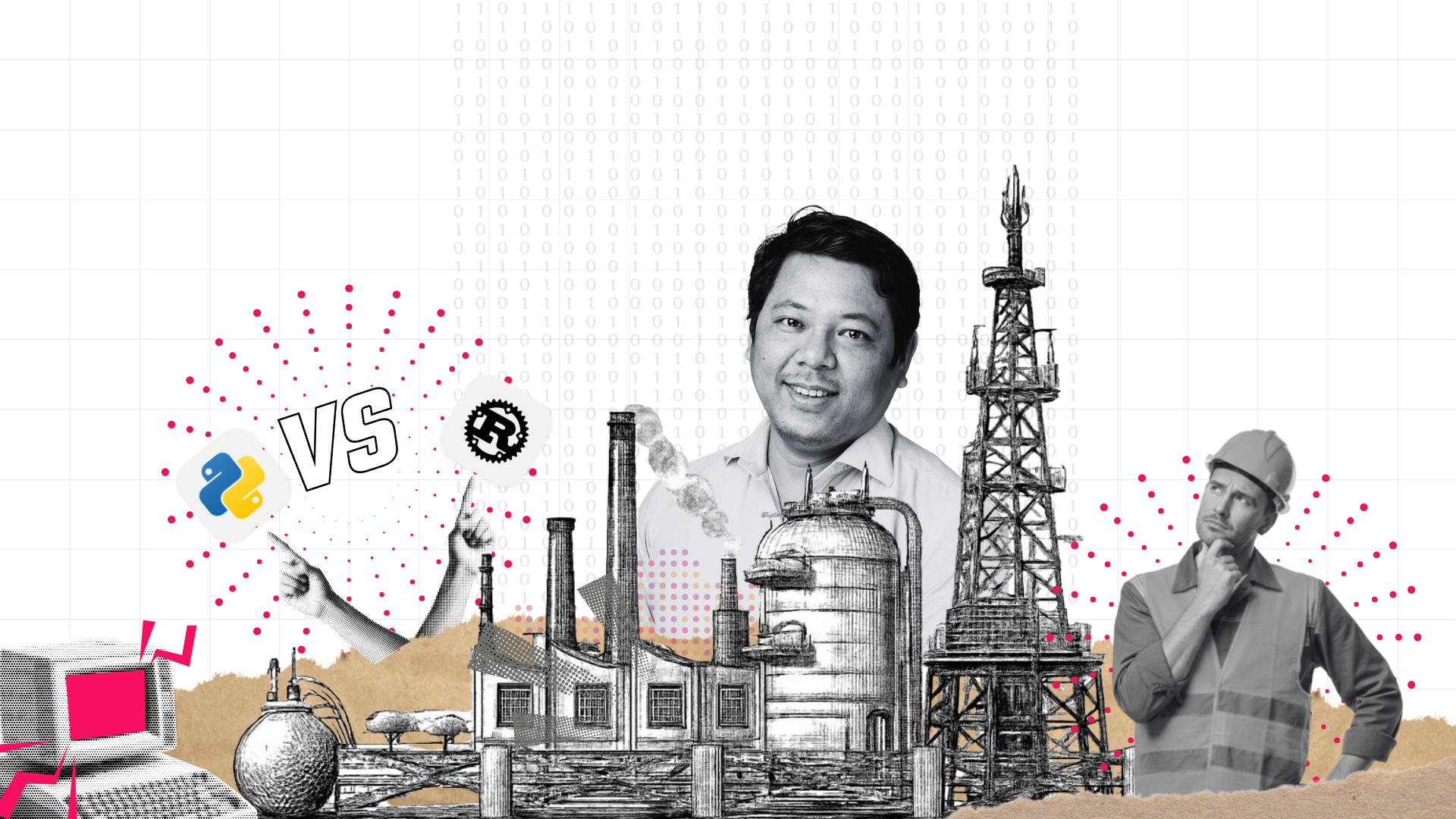
Which brings us to a question I am increasingly asked. When integrating telecom security and safety systems for energy environments, should we build in Python or in Rust? It is an interesting debate. But in my experience, it is also the wrong way to frame the problem.
Before choosing a language, we need to understand the integration landscape we are actually operating in.
Understanding the Integration Landscape
In energy environments, integration is never clean.
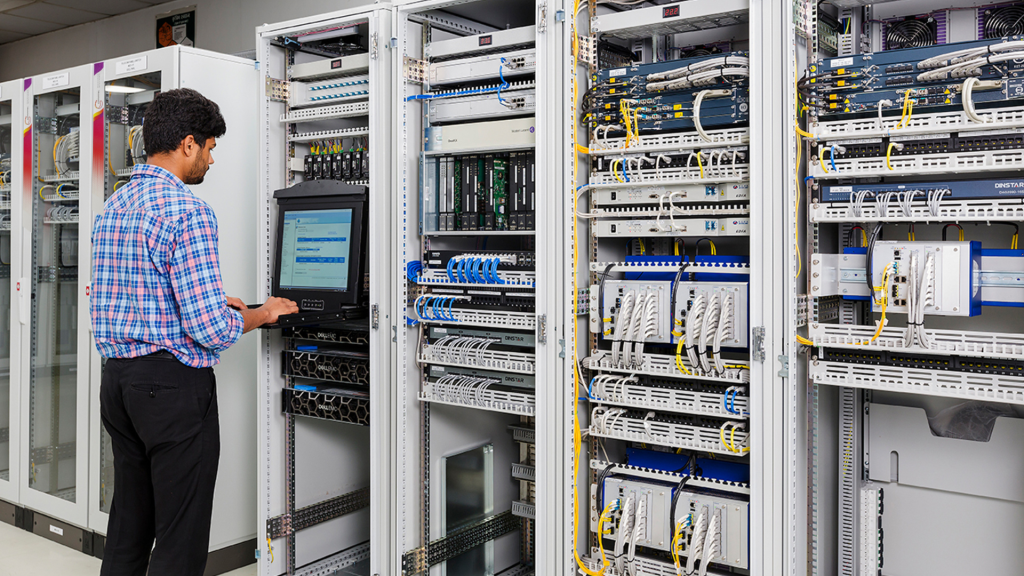
A refinery may run surveillance systems from one vendor, network devices from another, and a pipeline intrusion detection platform-built years earlier. Power utilities often operate legacy SNMP enabled hardware alongside modern IoT based sensors. Gas distribution networks rely on telemetry that must travel securely across large distances.
On paper, each system performs its own function. In reality, none of them can operate alone. SNMP keeps track of device health. MQTT carries telemetry from remote sensors. Camera systems rely on protocols such as OnVIF and RTSP. Edge controllers sit between hardware and the central network, translating physical events into digital alerts.
The complexity is not in any one protocol. It is in the orchestration.
Over time, we have seen that the integration layer becomes the real backbone of the deployment. It determines how alerts are correlated, how quickly events propagate, how securely data moves, and how gracefully the system handles scale.
Once you see integration at that level, the language decision starts to look different.

Where Python Naturally Fits
Python has earned its place in telecom integration for good reasons.
When the task is to connect multiple external systems, orchestrate workflows, consume APIs, and build automation logic, Python moves quickly. Its ecosystem around SNMP, MQTT, REST interfaces, and asynchronous processing makes it practical for integrating heterogeneous devices.
In many projects, Python becomes the glue. It helps correlate alarms from CCTV systems with telemetry events, supporting dashboarding layers and simplifying configuration management across distributed devices. It accelerates integration with vendor SDKs, especially when timelines are tight.
From an Industry perspective, this matters. Integration projects often operate under delivery pressure. Rapid prototyping and adaptability are not luxuries. They are operational necessities.
Python also performs well when integration logic involves event driven processing, rule engines, log parsing, and SIEM pipeline integrations. Its flexibility allows teams to iterate quickly when business logic evolves, which is common in large scale energy deployments.
However, Python’s strength lies in orchestration, not in deterministic, low-level control. When systems require sustained high output processing or real time packet handling, we begin to encounter its limits. Memory safety depends heavily on external libraries. Performance tuning requires careful oversight. Garbage collection pauses, while this is acceptable in many enterprise systems, it can introduce unpredictability in tightly coupled environments.
Python is powerful. But it must be positioned correctly within the architecture.
Where Rust Redefines Reliability
Rust enters the conversation from a different angle.
It was not built for convenience. It was built for correctness.
In energy networks, certain modules cannot afford memory leaks, crashes, or unpredictable behaviour, such as protocol gateways handling continuous telemetry streams, packet parsers sitting close to the network layer, and edge agents deployed in remote environments must operate without interruption.
Rust’s design enforces memory safety at compile time. It eliminates entire classes of runtime errors before deployment. There is no garbage collector introducing pauses. Performance remains consistent under load.
For high throughput MQTT brokers with TLS enforcement, SNMP trap listeners operating at scale, custom RTSP proxies, or secure protocol bridges between field devices and central systems, Rust provides deterministic behaviour and tighter control over resource management. This becomes critical when systems must handle thousands of concurrent connections without degradation.
That said, Rust demands more upfront investment. Its ecosystem is still growing in certain niche vendor SDK integrations. Teams require stronger systems programming expertise. Integration speed at the early stage can be slower compared to Python.
But in environments where uptime is measured in years rather than weeks, that trade-off often makes sense.

Strengths and Architectural Implications in Energy Integrations
When viewed through the lens of telecom security and safety integration in energy environments, both languages reveal clear strengths and structural considerations.
Python
Where it excels
- Rapid integration across multi-vendor ecosystems
- Workflow orchestration and event driven automation
- API mediation between surveillance, telemetry, and control systems
- Alarm correlation and rule-based processing
- Dashboarding layers and operational visibility tools
- Faster iteration when business logic evolves during deployment
Where architectural implications emerge
- Limited deterministic behaviour under sustained high throughput processing
- Dependency on external C bindings for performance critical modules
- Garbage collection pauses in tightly coupled, latency sensitive environments
- Increased engineering discipline required for memory safe integrations
Rust
Where it excels
- Stable protocol handlers and custom gateways operating under continuous load
- High performance network services with predictable latency
- Secure edge agents deployed in remote substations and field sites
- Deterministic telemetry processing where uptime expectations are measured in years
- Memory safety guarantees enforced at compile time
Where architectural implications emerge
- Steeper learning curve for integration teams
- Longer development cycles during early architecture stages
- Limited direct wrapper support for certain proprietary vendor SDKs
- Higher upfront engineering investment before productivity gains are realized
Neither language replaces the other. Their value depends on architectural placement within the integration stack.

Moving From Comparison to Architecture
The debate is often framed as Python versus Rust.
In Industry perspective, that framing oversimplifies the problem.
Energy infrastructure integration is not a single layer system. It is a stack. Some layers require agility. Others require uncompromising reliability.
If we ask which language is better in absolute terms, we miss the architectural intent. The more relevant question is where each language belongs.
When we shift the conversation from preference to placement, the integration strategy becomes clearer.
Designing the Hybrid Model
The most resilient architectures I have seen do not choose one language exclusively.
They separate responsibilities.
Rust is used to build the performance critical, safety sensitive modules. These may include protocol gateways, real time stream processors, secure telemetry collectors, or edge agents that must remain stable under continuous load.
Python operates at the orchestration layer. It manages workflows, integrates vendor APIs, correlates events, and powers automation frameworks and dashboards. It communicates with lower-level modules through well-defined interfaces or FFI bindings.
This layered approach allows each language to operate within its strength.
Rust enforces safety and performance at the core.
Python accelerates integration and adaptability at the control layer.
In sectors such as oil, power, and gas deployments, this balance reduces long term risk while preserving development velocity.
The Real Decision
In mission critical telecom security systems, the language decision is not about trends. It is about architectural discipline.
Python enables speed and flexibility in complex integration landscapes. Rust provides confidence in modules where failure is not an option.
As leaders responsible for building systems that support energy infrastructure, our responsibility is not to defend one language over another. It is to design architectures that remain stable under pressure, adaptable over time, and secure by design.