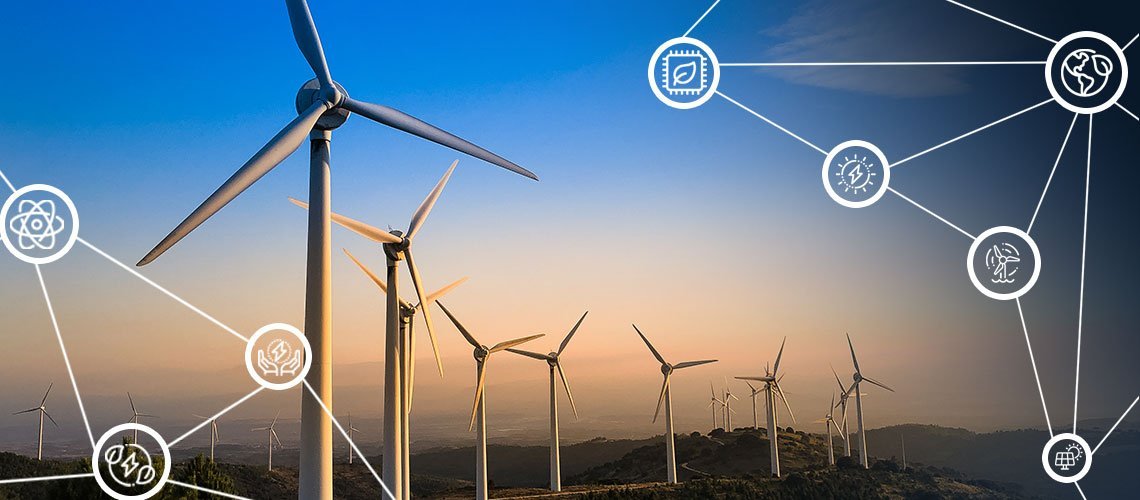
With an increased global emphasis on shifting towards renewable energy, wind power is a key sector that promises a sustainable energy future. But the complex nature of these systems that are often located in harsh or remote environments, present many challenges on an operational level. The digital twins are transforming this sector by enabling real-time monitoring, predictive maintenance, and holistic optimization.
Understanding Digital Twin
A digital twin is a dynamic simulation of a real-world asset that is able to continuously receive data from the sensors in the physical systems. It created a real-time feedback loop between the digital and physical worlds, and enables operators to witness the performance, predict failures, and simulate various scenarios before making any critical decisions for the actual physical systems.
When it comes to wind energy systems, digital twins can showcase individual turbine components, the entire turbine, or even the complete wind farms. These models receive real-time data from IoT sensors that can monitor various parameters like temperature, wind speed, blade angle, etc.
Predictive Insights with Real-Time Monitoring
Digital twins provide one of the most crucial benefits in wind energy i.e. real-time performance monitoring. The wind turbines go through varying levels of loads and stresses basis wind condition and terrain. Monitoring all these real-time fluctuations allows operators to detect anomalies sooner and proactively work on them rather than reacting to any issues after they arise.
E.g.: if there is an irregular vibration pattern detected by digital twin in a turbine’s gearbox, it can be an indication of a possible mechanical failure that could be critical in the future. With this early detection, the mechanical team can schedule an intervention at a suitable time, avoiding costly emergency repairs and minimizing any downtime.
Enhancing Safety Through Simulation and Predictive Maintenance
In wind energy, safety is the key concern, especially for offshore facilities where access is limited and the environmental conditions can be harsh. Digital twins allows operators to simulate and assess different operational situations like extreme weather or mechanical stress failures without the need of risking personnel exposure to such environments.
Also, with the functionality of predictive maintenance, digital twins reduce the need of physical inspections to a large extent. Advanced algorithms can analyze sensor data and help determine when any parts can possibly fail. This ensures that the repairs and replacements are aligned well in advance before the issue becomes severe. This eventually leads to efficient, safer operations, lowered maintenance costs, and a prolonged lifecycle of the turbines.
Energy Output Optimization and System Integration
Digital twins also help with optimizing the efficiency of energy generation. After the analysis of operations under varying conditions, operators can refine various parameters like blade pitch, yaw alignment, etc to be able to achieve maximum output. In additions, digital twins are able to simulate
collective performance and functioning of turbines across a wind farm, which can help identify ways to minimize wake effects with strategic placement and control.
System integration is another aspect where digital twins can be of great help. With the increasing focus on decentralization and digitization of the global grid, it is crucial that the renewable energy sources like wind should be able to interact seamlessly with other energy systems in place. Digital twins provide a platform where such complex interconnections can be modelled to ensure reliable performance and smooth integration of renewables.
Toward a Smarter, Resilient Energy Future
With the growth of wind energy sector, the importance of having intelligent infrastructure becomes extremely important. Digital twins provide a solution to this challenge that is efficient as well as scalable. With their capability to connect the physical and digital worlds, they allow operators to get deep insights, automate controls, and create resilient system design.
Global leaders are already investing in this technology and consider it as a foundation for their operational strategies. The combination of AI, big data, IoT, and cloud computing is accelerating the capabilities and deployment of digital twins while unleashing new levels of performance and reliability.
Conclusion
Wind energy is set to be a key player in decarbonization of global power systems. Digital twins will play a crucial role in making this transition not just feasible with regards to the technology but also ensure its economic and operational sustainability. With enhanced safety, improved efficiency, and seamless integration, digital twins are powering the wind energy sector towards a truly smart and scalable solution for energy needs of the future.