By Tim Bowman, Vice President – Projects Engineering & Delivery, Commtel Networks
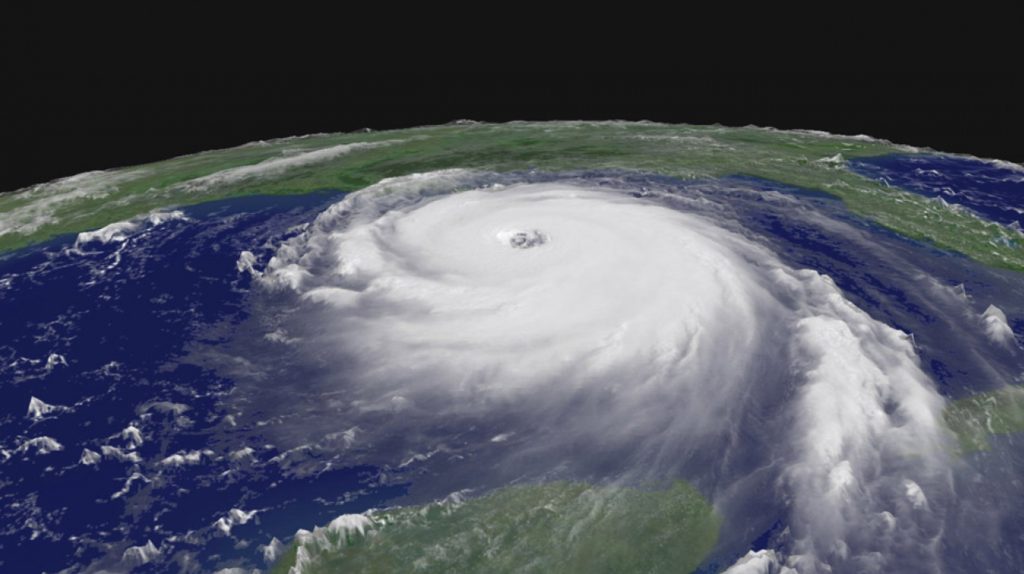
(Source : National Oceanic and Atmospheric Administration Website)
Hurricane Katrina, 2005 (U.S. Gulf Coast):
This is not a theoretical case study. It is something I lived through. During Hurricane Katrina, while the world watched New Orleans flood, I was working in Louisiana alongside the electric and power utility teams, supporting telecommunications under crisis conditions. I wasn’t inside the city, but I was close enough to see how quickly energy operations begin to unravel when communication falters. As the storm progressed, the operational backbone of the Gulf Coast energy corridor fractured. Offshore platforms lost links. Refineries shut down abruptly. Pipeline operators lost telemetry across long stretches of infrastructure. Fiber routes were severed. Microwave towers collapsed. Control rooms were forced into partial visibility at precisely the moment coordination needed to be fastest and most precise. What became immediately clear on the ground was this: the physical damage was only part of the problem. The larger failure was systemic. Oil, gas, and power assets did not fail in isolation. They destabilized together, because the communication layer binding them collapsed under stress. Restoration timelines stretched not just because assets were damaged, but because operators lacked reliable telemetry, command transmission, and situational awareness when decisions mattered most.
Why Disaster-Ready Networks Matter for Oil, Gas, and Power
In energy operations, communication is not an “IT layer.” It is the control surface of the asset. When it weakens, safe operation becomes guesswork.
● Pipelines need continuous sensing and reporting, leak detection, flow integrity, intrusion monitoring, because response time defines consequence.
● Power grids require stable, low-latency visibility for switching, relay coordination, and control under fault conditions, especially when grid stability is already under stress.
● Refineries and petrochemical facilities depend on safety systems and emergency communications (including PA/GA and integrated alarms) to manage incidents under structural, thermal, or process disruption.
This is exactly why ITSS – Integrated Telecom, Security and Safety Systems exist as a unified backbone- telecom, monitoring, security, safety, and emergency response engineered as one system, so that continuity is maintained even when conditions are hostile and access is restricted.

The Core Challenge: Modern Energy Infrastructure Fails at Its Weakest Communication Point
Energy networks are built across exposed geography. That exposure is not the problem. The problem is that failures arrive together
● Pipelines run through remote corridors that are hard to reach during floods, storms, or landslides.
● Transmission lines and substations sit in open environments where temperature extremes and fault conditions coincide.
● Refineries, LNG terminals, and offshore assets operate in hazardous zones where uptime and safety depend on controlled visibility.
When disaster hits, four things happen at once: access collapses, power becomes unstable, equipment protection triggers, and communication networks are overloaded or damaged. That combination is why “momentary” telemetry lapses turn into operational instability.
What Makes ITSS Architectures Fail-Safe?
When we design for disasters, the goal is not “high availability on paper.” The goal is predictable control when the environment is unpredictable. Three pillars enable that:
1) Redundancy
Fail-safe design starts by removing single points of failure. For geographically spread out CNIs: pipelines, power transmission, multi-nodal sites and resilient, high bandwidth backbones become essential. That’s where modern backbone approaches such as DWDM and MPLS-TP show up in real deployments for assured connectivity across large-area networks
2) Self-Healing Networks
During a storm or grid disturbance, the network must “route around damage.” That means automatic rerouting and continuity of telemetry even when nodes fail, because the control room can’t wait for manual recovery. The operating premise is simple: during fault conditions, the power system still needs reliable communication and control to maintain stability
3) Unified IT–OT–Safety Integration
In disasters, silos are where delays live. ITSS is explicitly positioned as “system-of systems” integration, telecom, security, safety working as one so decision-makers receive complete situational awareness and coordinated response actions. In power & utilities, this convergence is directly tied to OT–IT integration, enabling real time analytics, remote monitoring, and improved visibility across legacy and new infrastructure.
Lessons from Global CNIs: Oil, Gas, and Power Insights
Oil & Gas
Across upstream, midstream, and downstream, the operating requirement is consistent: unify telecom networks, real-time monitoring, security, safety, and emergency response, especially for remote and hazardous sites. Midstream depends on secure pipeline communications and integrity sensing; downstream depends on integrated safety and plant coordination.
Power
Power environments make the dependency explicit: systems must withstand temperature extremes and keep running during fault conditions because grid stability relies on reliable communication and control. The value proposition is visibility and downtime reduction across both legacy and modern infrastructure.
Public Safety at Energy Sites
Safety systems are not adjuncts; they are operational levers during crisis and PA/GA as a core emergency communication capability, integrated with alarms and emergency controls to deliver clear instructions and guide safe movement.
What Happens on the Ground During a Disaster?
In the field, disasters don’t create a single failure, they create a decision load.
● Sensors and systems generate surges of alarms and anomaly data.
● Safety systems shift into emergency modes.
● Remote sites become dependent on diagnostics and control links because physical access is delayed.
● Control rooms must choose between safe shutdown, isolation, rerouting, or continued operation and based on what the network can still see.
This is why ITSS is framed around real-time data and voice communications to enable swift response and minimize downtime.
Why Continuity Extends Beyond Assets: People, Safety, and Communities
During large-scale disasters, the impact of communication failure extends far beyond the asset owner. Energy networks underpin cities, hospitals, transport systems, emergency services, and industrial operations. When visibility is lost or restoration is delayed, disruption cascades quickly into daily life, affecting communities that depend on uninterrupted power and fuel to function safely.
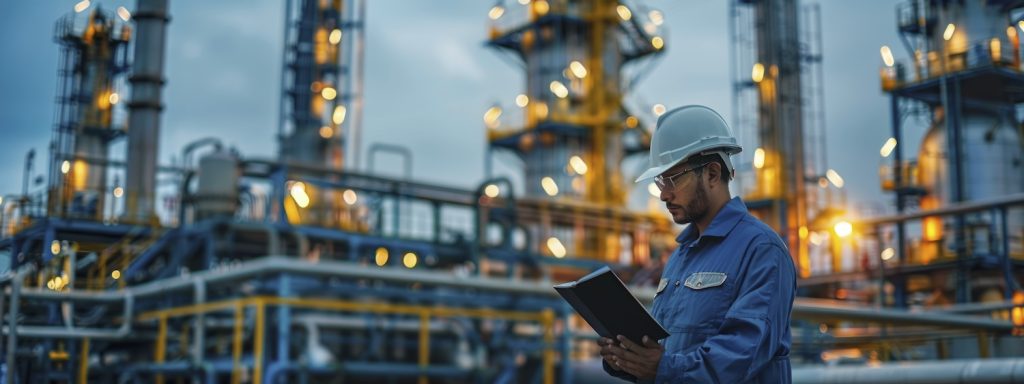
At the same time, employees are sent into the field under uncertain and often hazardous conditions to assess damage and restore services. Their safety depends on accurate, real-time information, knowing asset status, environmental risks, and operational boundaries before arriving on site. Integrated ITSS architectures provide the situational awareness that allows teams to make informed decisions, avoid unsafe zones, and coordinate restoration efforts with greater confidence.
The same integrated data that supports uptime also supports people. By unifying telecom, monitoring, and safety systems, operators reduce uncertainty for control rooms, field crews, and the communities they serve—helping ensure that restoration is not only faster, but safer.
Designing for the Next Decade: The Future of Fail-Safe ITSS Networks
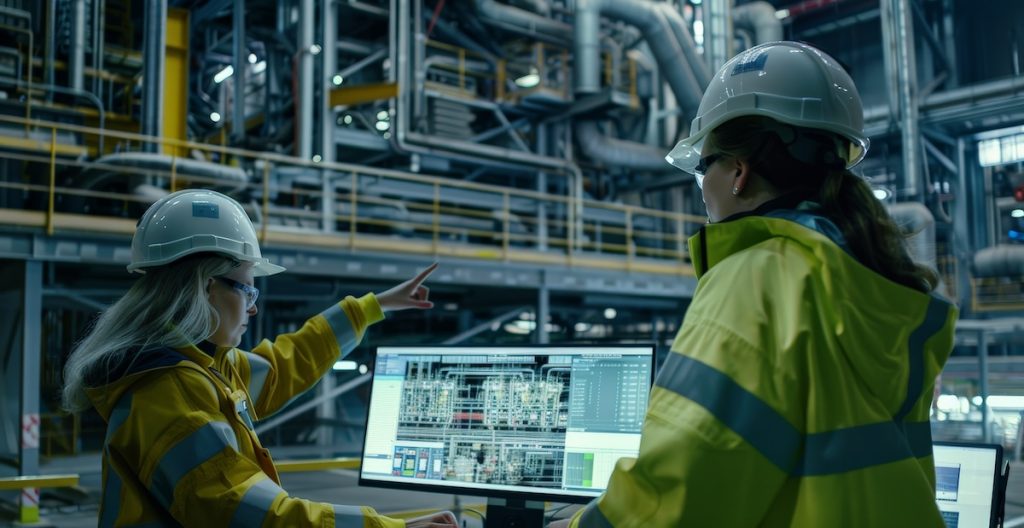
The next decade increases both complexity and expectation: more distributed generation, more remote expansion, more automation, and less tolerance for downtime. Two shifts are already visible in the underlying ITSS definition and trends:
● ITSS is increasingly designed to embed AI/ML, analytics, IoT, and future-ready frameworks to keep systems secure and effective as demands scale.
● Modern infrastructure requires data-driven decision-making, where analytics and AI help structure operational data for predictive maintenance and asset management.
This is where fail-safe design is heading: not only resilient transport (DWDM/MPLS-TP, resilient backbones), but intelligent operations, detect earlier, respond faster, recover cleaner.
Conclusion:
During a disaster, pipelines may stretch, power lines may fall, and access roads may disappear, but communication cannot. Fail-safe networks are not optional for Oil, Gas, and Power Critical National Infrastructure. They are the difference between disruption and continuity.