By Sonal Bhatia, Assistant General Manager – PPC-HR, Commtel Networks

When we talk about Critical National Infrastructure (CNI), the conversation naturally gravitates towards technology.
Resilient networks. Secure communications. Surveillance systems. Command centres. Integrated safety solutions. Cybersecurity. The digital platforms that keep critical operations running.
And rightly so. The infrastructure supporting modern nations is becoming increasingly connected, intelligent and technology driven.
But behind that technology sits another equally important part of the digital backbone: the people who design, integrate, deploy, operate and sustain it.
In Integrated Telecom, Security and Safety (ITSS), sophisticated technology is only as effective as the capability to turn it into a functioning, reliable solution.
That requires more than technical expertise. It calls for engineering depth, systems integration, project execution, customer understanding, problem-solving, collaboration and the ability to operate effectively in complex, mission-critical environments.
Technology is only the starting point
A critical infrastructure project rarely involves one technology working in isolation. Telecommunications, networking, security, surveillance, safety systems and operational technologies must work together as part of a larger system.
That changes the capability requirement.
An engineer may be highly proficient in a particular technology. A project manager may excel at planning and execution. A systems specialist may understand integration requirements in depth.
But the final solution depends on how effectively those capabilities come together. This is where capability begins to extend beyond technical knowledge alone.
ITSS professionals increasingly need to combine domain expertise with systems thinking, understanding dependencies, anticipating risks, communicating across functions and making informed decisions as conditions change.
The question is therefore no longer simply:
“Do we have the technical skills?”
It is:
“Do we have the capabilities to apply those skills in a complex, interconnected environment?”
The new capability equation
As ITSS environments become more sophisticated, capability needs to be viewed across several dimensions.
1. Deep technical expertise
Technical excellence remains the foundation.
Engineers and specialists require strong domain knowledge across areas such as telecom networks, systems engineering, infrastructure, security and safety technologies, integration and testing.
But technical knowledge does not stand still.
What is advanced today can become standard tomorrow. Continuous learning, upskilling and reskilling therefore become important as technologies, standards and customer requirements evolve.
2. Systems thinking
Technical depth is essential. So is the ability to see the bigger picture.
When multiple technologies interact, an issue in one part of the system can have consequences elsewhere.
Professionals therefore need to understand relationships, interfaces and dependencies rather than viewing individual responsibilities in isolation.
Systems thinking helps teams move beyond solving a problem in front of them to understanding why it exists, what else it affects and what the solution may change elsewhere.
That becomes particularly valuable on large-scale, multidisciplinary projects.
3. Project execution
A technically excellent solution still has to be delivered.
ITSS projects can involve multiple stakeholders, locations, vendors, technical teams, timelines and customer requirements.
Planning, coordination, documentation, risk management, stakeholder communication and timely decision-making are therefore not activities sitting outside the technology.
They are part of what turns technology into infrastructure.
4. Problem-solving and adaptability
Critical infrastructure projects do not always unfold exactly as planned.
Requirements can change. Deployment environments can create unexpected challenges. Equipment, systems or dependencies may behave differently from what was anticipated. Operational requirements may evolve.
In those situations, predefined technical solutions are not enough.
Teams need analytical problem-solving, sound technical judgement and the adaptability to respond effectively as conditions change.
Being able to operate when circumstances shift can matter just as much as performing when everything goes according to plan.
5. Collaboration becomes an execution capability
In ITSS, collaboration cannot be treated simply as a behavioural competency.
It becomes part of execution.
A complex infrastructure solution may bring together engineering, project management, procurement, commercial teams, field teams, customers and technology partners.
Each sees the project through a different lens.
Engineering may focus on technical feasibility. Project teams may focus on timelines and dependencies. Commercial teams may focus on contractual requirements. Customers may focus on operational outcomes.
Successful execution depends on bringing those perspectives together.
That requires professionals who can communicate across disciplines, translate technical concepts for different stakeholders and create alignment around a common outcome.
The strongest teams are not necessarily those with the greatest concentration of individual expertise.
Often, they are the teams that connect expertise most effectively.
Building capability for the future
For HR and Learning & Development functions, this creates an important capability-development question.
In a complex ITSS environment, addressing individual skill gaps is unlikely to be enough on its own.
Capability development needs to consider both technical depth and the wider project-execution capabilities required to deliver integrated systems.
Organisations therefore need to ask:
- Which technical and project-execution capabilities are most critical to current and emerging project requirements?
- Which technical skills and relevant certifications need strengthening?
- Where are we dependent on scarce or specialised expertise?
- Which roles would benefit from greater cross-functional exposure across engineering, integration, quality, project management and customer-facing work?
- Where should training, certification or strategic hiring be prioritised?
- How do we sustain specialist knowledge as technologies and project requirements evolve?
- How do we prepare teams to work effectively across increasingly integrated and complex technology environments?
The response can combine structured training, relevant certification, cross-functional exposure and practical on-the-job learning, supported where required by strategic hiring.
Because capability cannot be built once and considered complete. It has to evolve with the technology, the standards and the projects themselves.
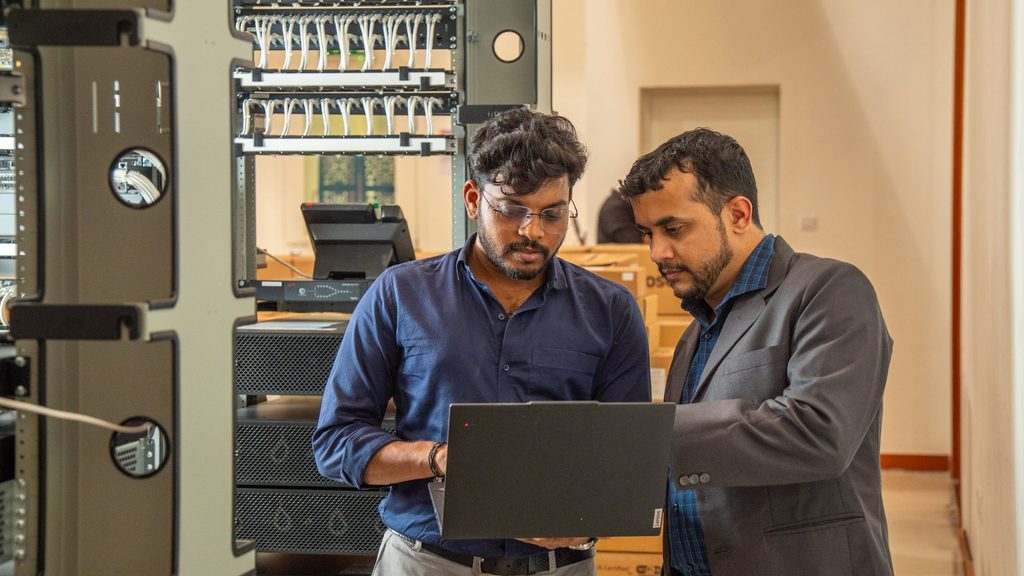
The human infrastructure behind critical infrastructure
There is another reason this matters: reliability.
Critical infrastructure depends on it.
And reliability is shaped not only by the technology itself, but by how that technology is designed, integrated, tested, deployed, operated and maintained.
It is the engineer who identifies a potential failure before deployment.
The project manager who brings teams together when a critical dependency changes.
The field professional who resolves an unexpected issue during implementation.
The technical specialist who shares hard-earned project knowledge so it can be applied consistently across the team.
The project leader who creates the coordination required when risks, dependencies or requirements change.
None of these actions is a technology component.
Yet each influences how reliably the final infrastructure is delivered and sustained.
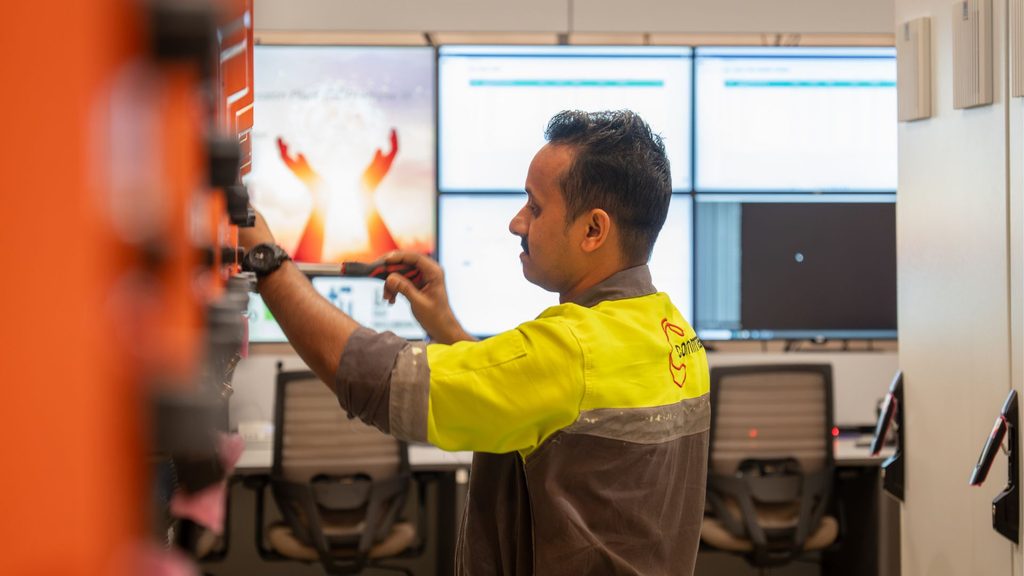
In that sense, people are part of the infrastructure.
From workforce to capability ecosystem
The future of ITSS will be shaped by emerging technologies, greater integration and increasingly complex infrastructure requirements.
But technology alone will not create resilient CNI.
Organisations delivering ITSS will need a capability mix in which technical expertise, project execution, collaboration and continuous learning reinforce one another.
For HR and L&D, that creates an opportunity to extend the role beyond individual training programmes and help build and sustain the specialised workforce capabilities required for complex infrastructure projects.
At Commtel, operating at the intersection of communications, technology and critical infrastructure provides a close-up view of this reality.
Technology may form the digital backbone.